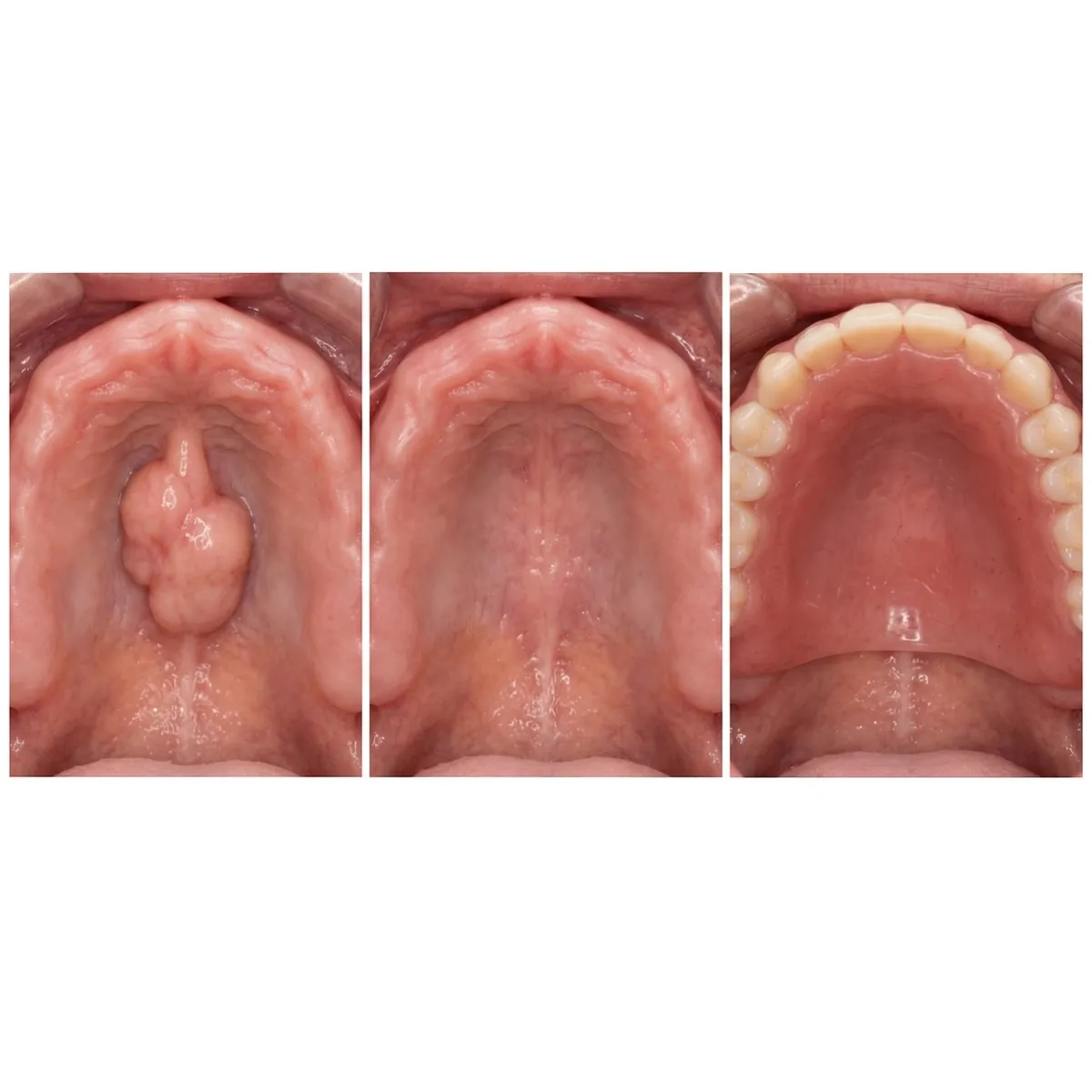
"Tori are common bony growths that are usually harmless, but when they interfere with your daily life or dental care, removal is a straightforward procedure. At Cookeville Oral Surgery, we provide expert tori removal with minimal discomfort and quick recovery."
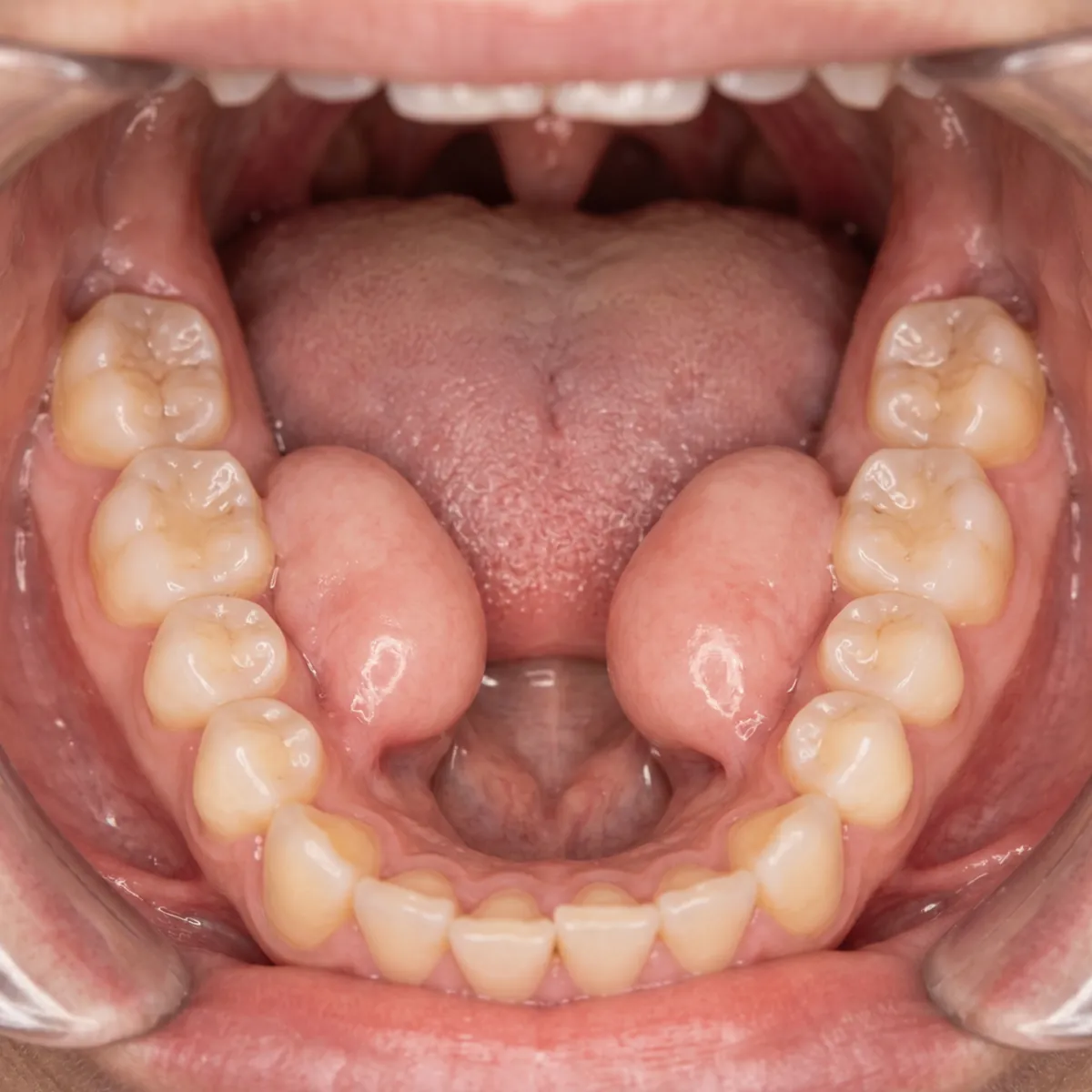
What Are Tori?
Tori (singular: torus) are benign bony growths that develop in the mouth. The two most common types are torus palatinus, which grows on the roof of the mouth (palate), and torus mandibularis, which develops along the inner side of the lower jaw near the tongue.
Tori are quite common, affecting up to 20-30% of the population. They tend to develop gradually over time and are believed to be influenced by genetics, teeth grinding (bruxism), and bite forces. They are completely benign and are not cancerous or pre-cancerous.
While tori usually don't require treatment, they can become problematic when they grow large enough to interfere with speech, eating, denture fitting, or oral hygiene. When tori cause functional issues, surgical removal is a safe and effective solution.
When Is Tori Removal Needed?
Denture Interference
Tori can prevent dentures or partial dentures from fitting properly, making prosthetic fabrication difficult or impossible.
Difficulty Eating
Large tori can interfere with chewing and make it difficult to eat certain foods comfortably.
Speech Problems
Tori on the palate can affect tongue placement and cause speech difficulties or lisping.
Chronic Irritation
The thin tissue covering tori is easily irritated or ulcerated by hard or sharp foods, causing recurring sore spots.
Oral Hygiene Challenges
Tori can make it difficult to properly brush and floss, leading to increased risk of gum disease and decay.
Implant or Prosthetic Planning
Tori may need to be removed as part of pre-prosthetic surgery before dental implants or other restorations.
Types of Tori
Torus Palatinus
Bony growths on the roof of the mouth (hard palate). These are the most common type and can range from small bumps to large, lobulated masses that cover much of the palate.
Torus Mandibularis
Bony growths along the inner surface of the lower jaw, usually on both sides near the premolar teeth. They can grow as single or multiple nodules.
Buccal Exostoses
Bony growths on the outer surface of the upper or lower jaw, near the cheek side. These are less common but can also interfere with prosthetics and oral function.
What to Expect
Your surgeon will examine your tori, discuss your symptoms, and determine if removal is recommended. X-rays or 3D imaging may be used to assess the extent of the bony growths.
Life After Tori Removal
Most patients are pleasantly surprised by how much better their mouth feels after tori removal. Everyday activities like eating, speaking, and wearing dentures become significantly more comfortable.
The thin tissue of the palate and floor of the mouth heals well after surgery, and the bony growths rarely recur once removed. Many patients wish they had the procedure done sooner.
If you are planning to receive dentures, tori removal creates the smooth, even bone surface necessary for a well-fitting prosthesis. This can dramatically improve denture comfort and stability.