
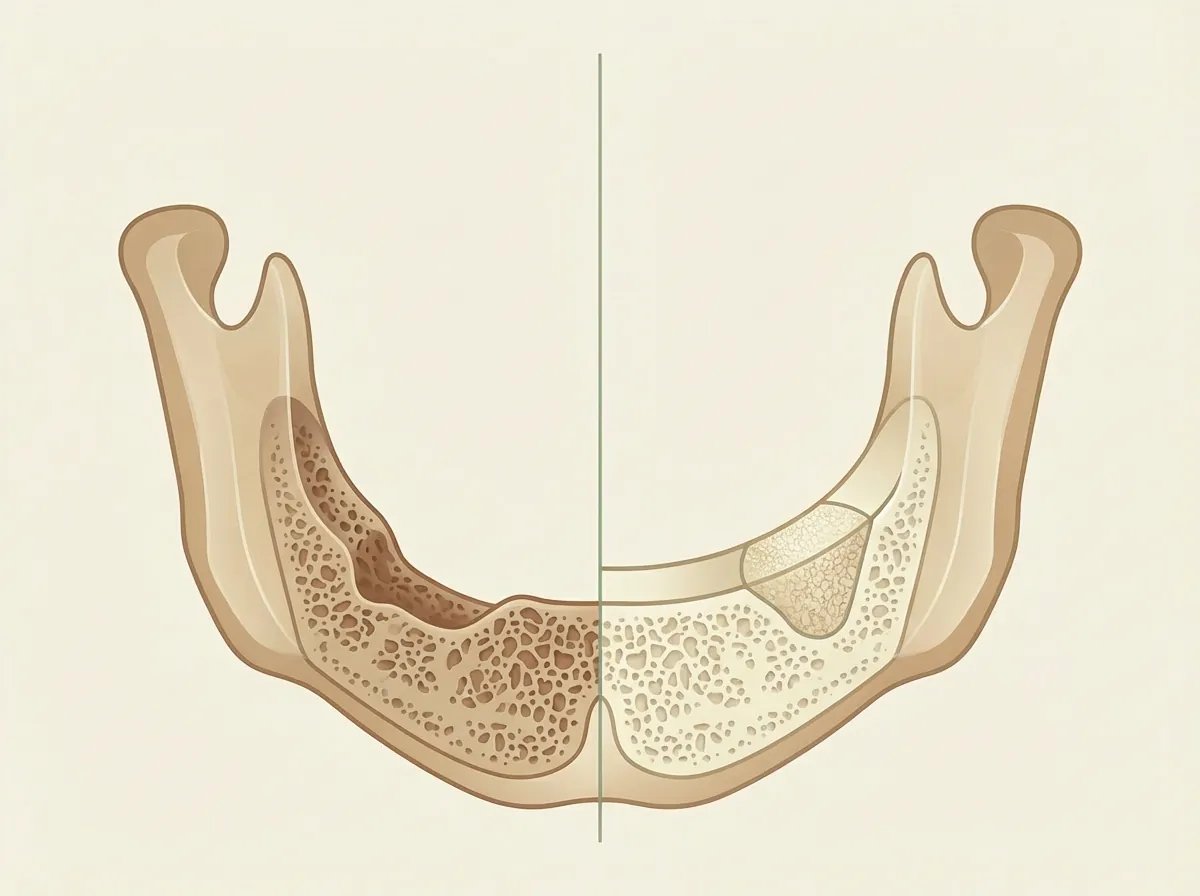
What Is Bone Grafting?
Bone loss in the jaw can occur due to periodontal disease, infections, traumatic injuries, or prolonged tooth loss. When the jawbone deteriorates, it can compromise oral health and make dental implant placement difficult or impossible.
Bone grafting is a surgical procedure that rebuilds and regenerates jawbone tissue. By placing bone graft material in the affected area, the body's natural healing processes stimulate new bone growth, restoring the volume and density needed to support dental implants.
Whether you've experienced bone loss from a single extraction or long-term tooth loss, bone grafting can rebuild the strong foundation necessary for successful implant placement and long-term oral health.
How Does It Help?
Advanced bone grafting techniques allow our surgeons to grow bone where it's needed most. This enables patients who were previously told they didn't have enough bone for implants to become excellent candidates for treatment.
Bone grafting is often performed in conjunction with dental implants, restoring the jawbone's structure so that implants can be securely placed and integrated for long-lasting results.
Even patients with significant bone loss can benefit from modern grafting procedures, allowing them to enjoy the life-changing benefits of permanent tooth replacement.
Rebuild & Restore
Advanced grafting techniques for optimal implant outcomes
Precision & Care
3D imaging and PRP therapy for optimal results
The Bone Grafting Procedure
Several types of bone graft materials may be used depending on your needs. Autografts use bone harvested from your own body, allografts use processed donor bone, xenografts use animal-derived bone material, and synthetic grafts use biocompatible materials that stimulate bone growth.
During the procedure, the graft material is carefully placed in the area of bone deficiency and secured with a membrane to protect the site and encourage healing. The graft serves as a scaffold for your body to generate new, natural bone tissue.
Our board-certified surgeons use 3D CBCT imaging for precise surgical planning and platelet-rich plasma (PRP) therapy to accelerate healing and enhance bone regeneration, ensuring the best possible outcomes.