
"Your mouth is one of your body's most important warning systems. At Cookeville Oral Surgery, we take every oral change seriously and provide thorough evaluations to protect your health."
What Is Oral Pathology?
The inside of the mouth is normally lined with a special type of skin called mucosa that is smooth and coral pink in color. Any alteration in this appearance could be a warning sign of a pathological process, with the most serious being oral cancer.
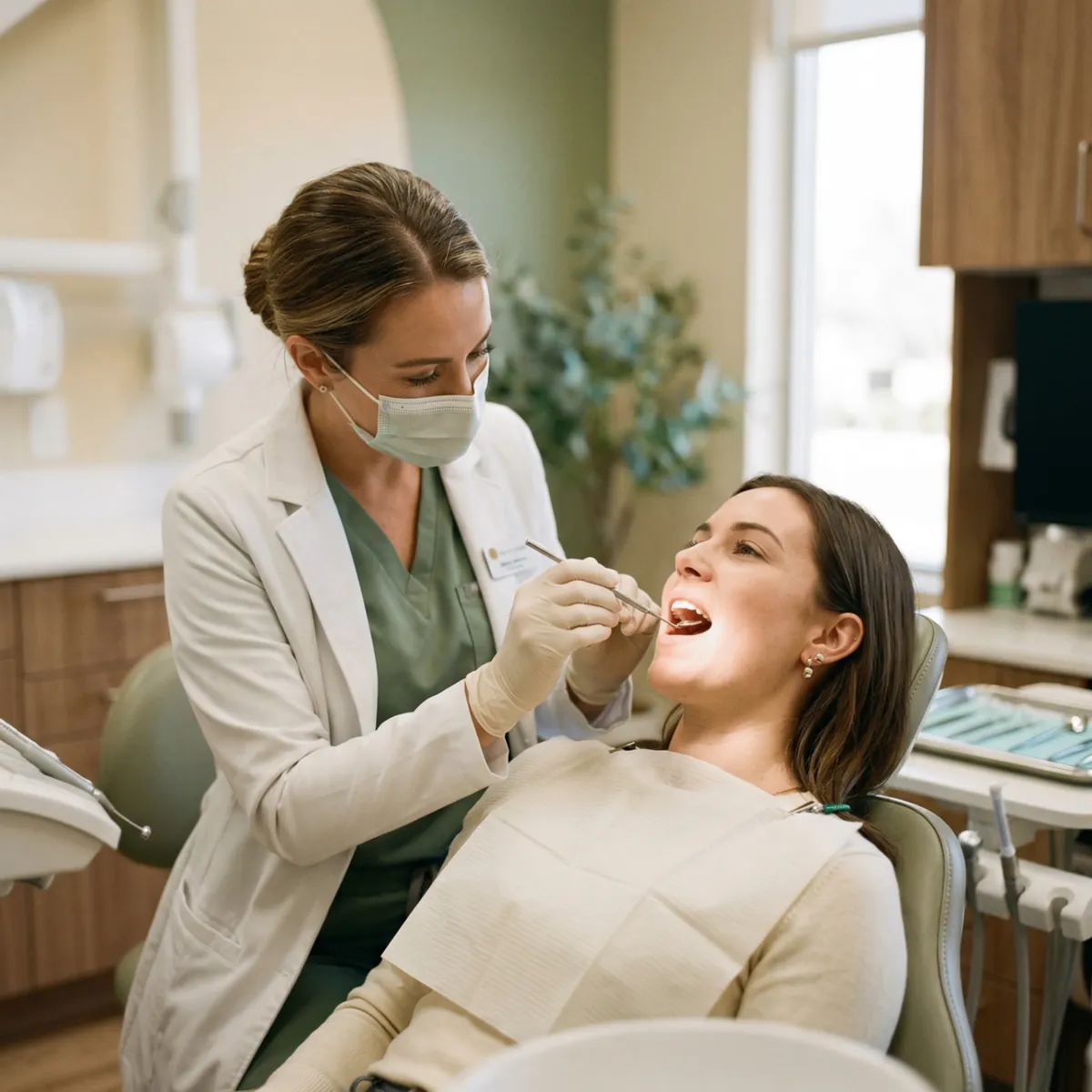
As oral and maxillofacial surgeons, we evaluate conditions in the oral cavity and associated structures to determine whether changes are normal or pathological. Evaluations include a thorough medical history, direct examination, and when necessary, advanced imaging to assess changes in bone and soft tissue.
When a suspicious area is identified, a biopsy may be performed and the tissue analyzed under a microscope by a pathologist. This is essential for obtaining an accurate diagnosis and determining the most effective treatment plan.
Warning Signs to Watch For
Reddish patches (erythroplakia) in the mouth
Whitish patches (leukoplakia) in the mouth
A sore that fails to heal and bleeds easily
A lump or thickening on the skin lining the mouth
Chronic sore throat or hoarseness
Difficulty chewing or swallowing
Unexplained facial or oral pain
Numbness or tenderness in the mouth or lips
These changes can be detected on the lips, cheeks, palate, gum tissue, tongue, face, and neck. Pain does not always occur with pathology and is not often associated with oral cancer. Do not ignore suspicious lumps or sores.
Common Oral Pathology Conditions
Oral Cancer Screening
We perform thorough evaluations to detect early signs of oral cancer, including examination of mucosal changes, suspicious lesions, and abnormalities in the mouth, salivary glands, and jawbone. Early detection significantly improves treatment outcomes.
Cysts & Tumors of the Jaw
Pathology can develop within the jawbone, often around impacted teeth. We diagnose and surgically treat cysts and tumors using advanced imaging and biopsy techniques to ensure complete removal and proper healing.
Biopsies & Tissue Analysis
When a suspicious area is identified, we perform biopsies to collect tissue samples for microscopic analysis by a pathologist. This is essential for accurate diagnosis and determining the best course of treatment.
Impacted Tooth Pathology
Pathology can develop around any impacted tooth, ranging from routine infection to cyst formation or tumor development. This is why we recommend evaluation and extraction of impacted teeth, or periodic monitoring if they are retained.
The Diagnostic Process
We begin with a comprehensive review of your medical history and a discussion of your symptoms, including when you first noticed changes, any pain or discomfort, and risk factors such as tobacco or alcohol use.
Perform Regular Self-Examinations
We recommend performing monthly oral self-examinations in addition to regular dental checkups. Stand in front of a mirror in a well-lit area and examine the following:
Check your lips, the inside of your cheeks, your gums, the roof of your mouth, your tongue (top, bottom, and sides), and the floor of your mouth. Look for any color changes, lumps, bumps, thickenings, swellings, or sores that have not healed within two weeks.
Also feel your neck and under your jaw for any lumps or enlarged lymph nodes. If you notice anything unusual, contact our office promptly for an evaluation. Early detection is the key to successful treatment.